English Holiday Idioms, Expressions & Other Common Phrases

December 7, 2022

Share this post
'Tis the season when people greet each other and wish each other well more often than usual.
Most English-speaking countries use certain vocabulary, expressions, and greetings for wishing each other a happy holiday. Your students will appreciate learning these English holiday expressions, idioms, and other common phrases. What’s more, you can make this into a productive lesson by teaching them when to capitalize holiday-specific terms.
If you have a multicultural class, have students compare English holiday idioms and festive expressions with what they say in their own languages.
Ready to start teaching your students some fun holiday-related vocabulary and expressions in English? Let’s dive in…
Holiday vocabulary: Learn the basics
Before we jump into holiday-related expressions, it's important to first introduce your language learners to some holiday vocabulary.
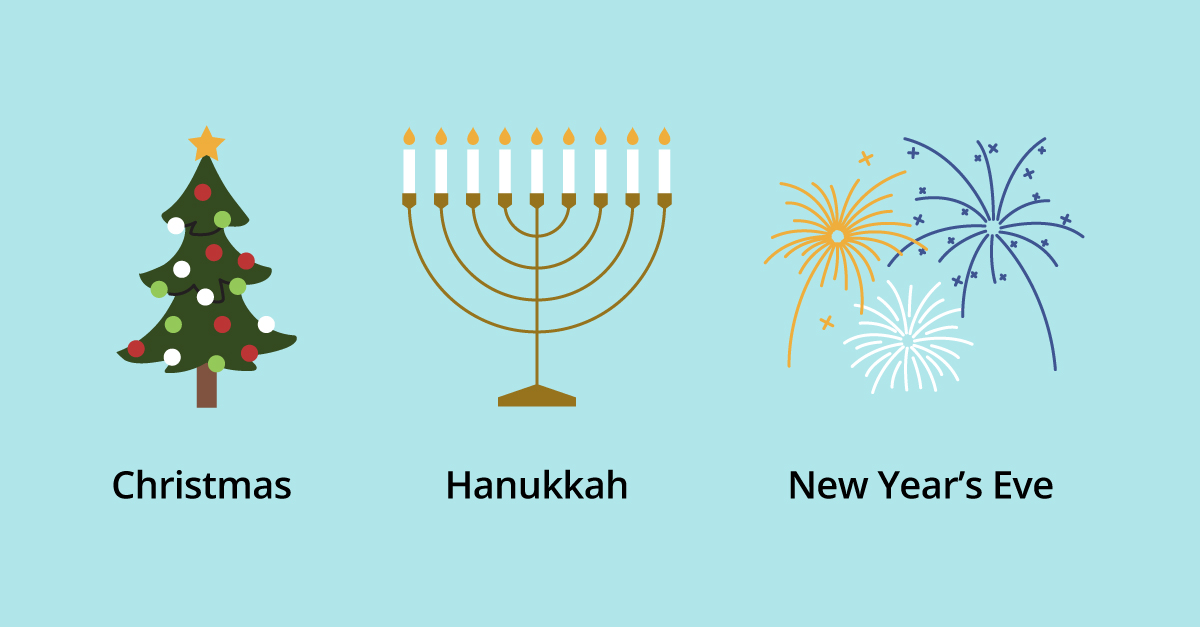
Review the spelling and capitalization of these common holidays with your students:
- Christmas Eve
- Christmas Day
- Christmastime
- Christmas morning
- Christmas dinner
- Boxing Day
- Kwanzaa
- Chanuka/Hanukkah
- New Year's Eve
- New Year's Day
Holiday idioms and expressions for better conversation
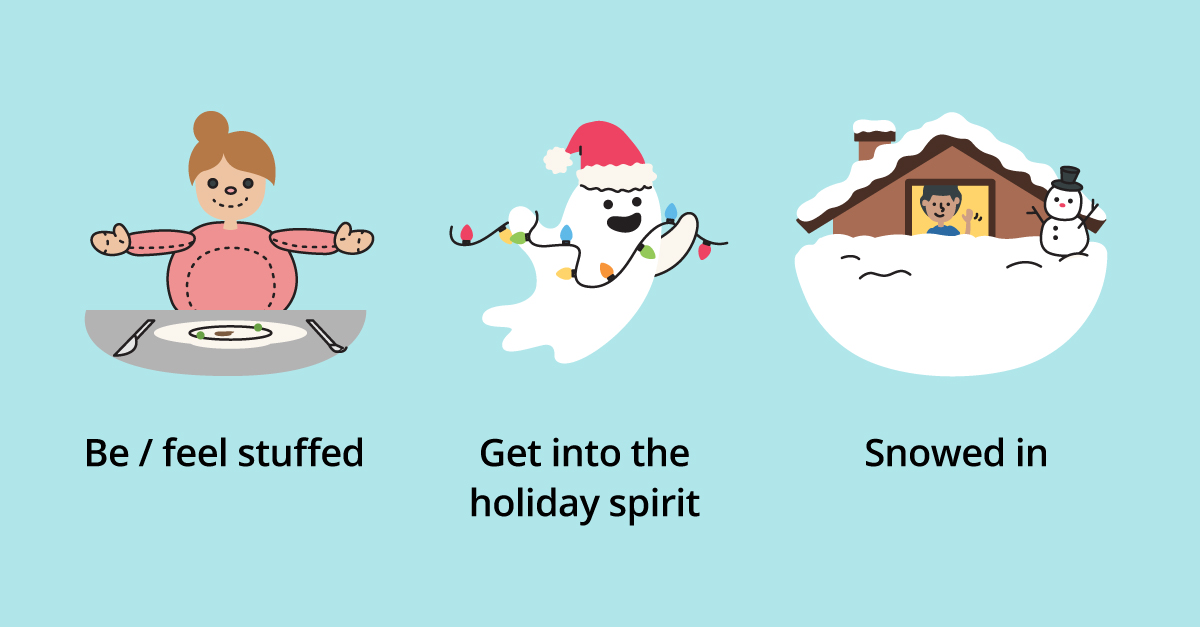
Students love learning idioms and expressions for many reasons—they’re commonly used in conversations, movies, etc., and they’re fun to learn, especially when accompanied by funny, literal illustrations! Recognizing and using idioms also helps learners improve their overall fluency.
We’ve compiled a list of eight familiar holiday idioms and expressions for you to teach this season.
After reviewing, you could follow up by asking if they know any others, having them draw their own literal illustrations, or having them include as many as they can in dialogues they write and perform in pairs.
1. The more the merrier
Meaning: the more people there are, the more enjoyable the event will be
Example: A: “Do you mind if I bring my friends along?” B: “Not at all! The more the merrier!”
2. Be / feel stuffed
Meaning: to be full after eating a heavy meal
Example: No more turkey for me, thanks. I’m stuffed!
3. Deck the halls
Meaning: to decorate the inside of your home for the holidays
Example: This weekend I will deck the halls with lights, shiny tinsel, and mistletoe.
4. Snowed in
Meaning: unable to leave because there’s too much snow
Example: My house is out in the country, so sometimes I'm snowed in for a week or so.
5. Get into the holiday spirit
Meaning: to feel joyful during the holiday season
Example: Sherry baked gingerbread cookies and put on some Christmas music to help her get into the holiday spirit.
6. Scrooge / Grinch
Meaning: a grumpy and unkind person who doesn’t like celebrating the holidays
Example: He wouldn’t even let me put on some holiday music. What a Scrooge!
7. Be there with bells on
Meaning: to be eager and more than happy to do something or go somewhere
Example: I asked him if he was coming to the party. He told me he’ll be there with bells on!
8. Ring in the new year
Meaning: to celebrate the end of the previous year and the beginning of the new one
Example: Carlos plans to ring in the new year with his three best friends.
Holiday greetings for cards, emails, or texts
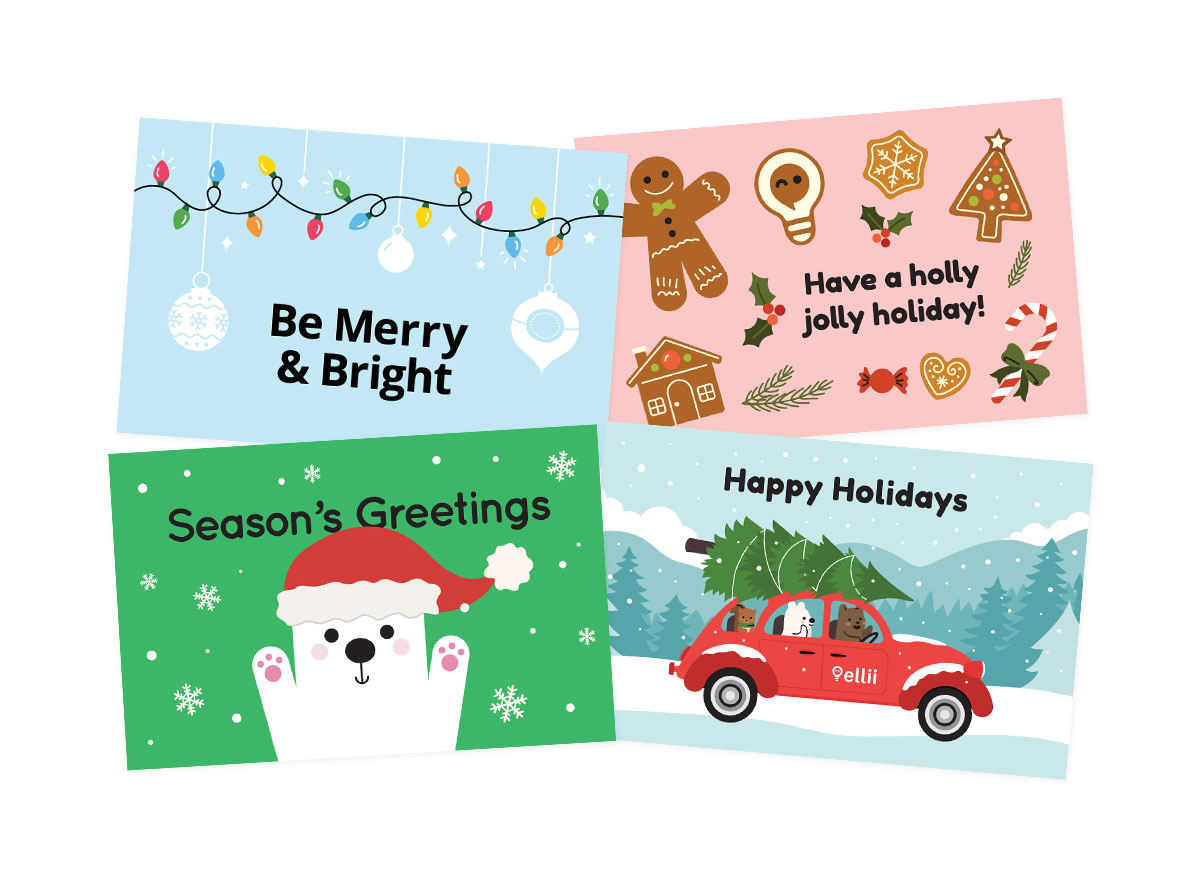
Holiday greetings are spoken to friends, family, neighbors, coworkers, and even strangers on the street or in stores. These expressions are also written in cards, emails, text messages, etc.
When written, many people follow the holiday greeting with an exclamation mark (e.g., Happy Holidays!). Note: “Happy Holidays” and “Season’s Greetings” are usually capitalized, but “Happy holidays” and “Season’s greetings” are also possible.
Your students will likely appreciate knowing how to wish each other well in English during the holiday season.
Spread the joy with these popular English holiday greetings:
- Happy Holidays (more neutral as it includes all winter holidays)
- Season’s Greetings (more neutral and formal)
- Merry Christmas (common in American and Canadian English)
- Happy Christmas (common in British English)
- Happy Chanukah/Hanukkah (Jewish festival also known as “The Festival of Lights”)
- Happy Kwanzaa (celebration that honors African heritage in African American culture)
- Happy New Year (“Happy New Year’s” is a common mistake people make)
Are your students planning on sending greetings cards or emails to their family or colleagues this holiday season? Try this festive activity: Have your students write a holiday greeting card in English using their favorite holiday greeting.

Keep in mind!
People might be celebrating a variety of holidays during this season. If you’re not certain if a colleague or acquaintance celebrates Christmas, choose a neutral greeting such as “Happy Holidays” or “Season’s Greetings.”

Holiday slang words every student should know
It’s important for English learners to become familiar with holiday slang (slang is short for “short language”). These common, every day expressions and phrases are often used in informal settings.
Teaching them some fun holiday slang will help students improve their fluency as well as their conversational skills.
Here are two holiday words that are often used as slang:
Prezzies
This shortened form of “presents” is heard more and more these days. Both “prezzies” and “pressies” are pronounced preh zees (/ˈprɛ ziz/). The difference in spelling depends on where you live.
- prezzies (preferred spelling in North American English)
- pressies (preferred spelling in British English, but prezzies is also common)
Xmas
“Xmas” is the shortened form of “Christmas'' and is pronounced eks muhs (/'ɛks məs/). Xmas is most commonly used in informal settings, especially when writing to close friends and family. It’s not so common in everyday verbal conversations.
- Xmas (singular noun)
- Xmases (plural noun)
Keep in mind!
Some people might be offended by the abbreviation of “Christ” to “X” because it puts the focus on commercialization instead of on Christ, the religious figure at the center of this Christian holiday. When in doubt, don’t abbreviate.
Related materials
We've got you covered for holiday lessons and fun!
- December Holidays collection
- Christmas flashcards
- New Year's flashcards
- How to Make a Paper Snowflake
- Make a Sweet Gingerbread Door for Your Classroom
- How to Write Holiday Greeting Cards in English
- Sleigh Vs. Sled: What's the Difference?
- "Merry Christmas" or "Happy Holidays"? Let's Debate!
Editor's note: This post was originally published in December 2013 and has been updated for comprehensiveness.
Comments


There are no comments on this post. Start the conversation!